Metal Roof Coating
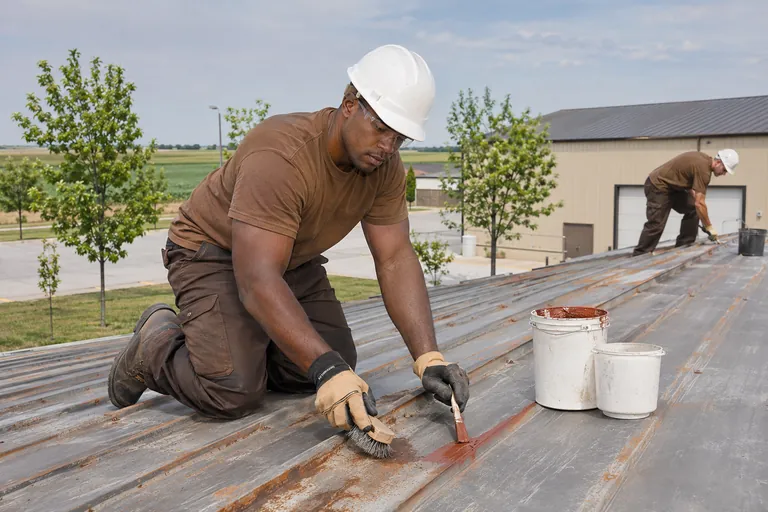
Steel warehouses and shops with faded paint, loose screws, and light rust. Laps and screw heads are sealed with fabric and base coat, rust is primed, and the panels get a continuous coating.
See Metal Roof Coating
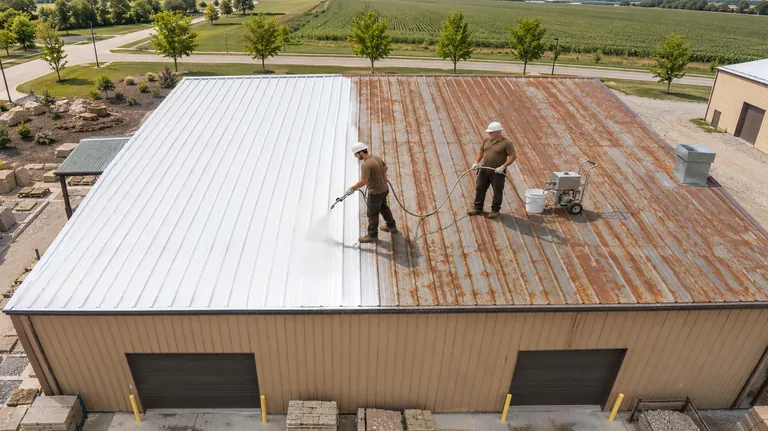
We provide metal roof coating services in Papillion for steel, low-slope, foam, and shingle commercial roofs, matching each system to what the roof shows us.
Each of our metal roof coating services in Papillion starts with a roof walk. Pick the system closest to your roof and read what it fits.
Steel warehouses and shops with faded paint, loose screws, and light rust. Laps and screw heads are sealed with fabric and base coat, rust is primed, and the panels get a continuous coating.
See Metal Roof Coating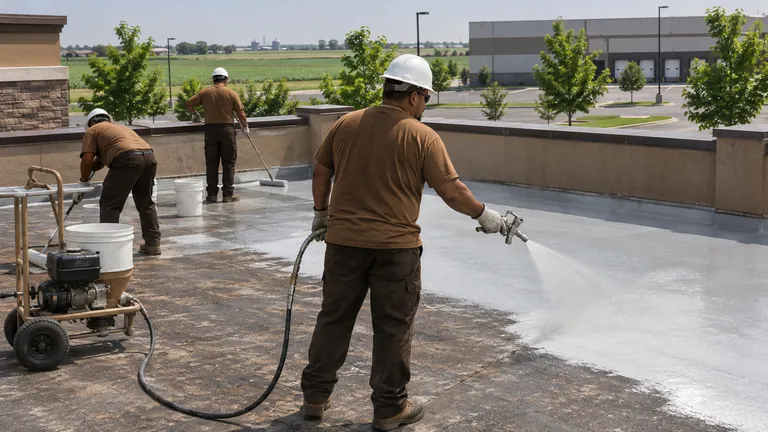
Flat and low-slope sections that pond after storms. Silicone resists standing water, so we use it where drains run slow, and every later recoat stays silicone.
See Silicone Roof Coating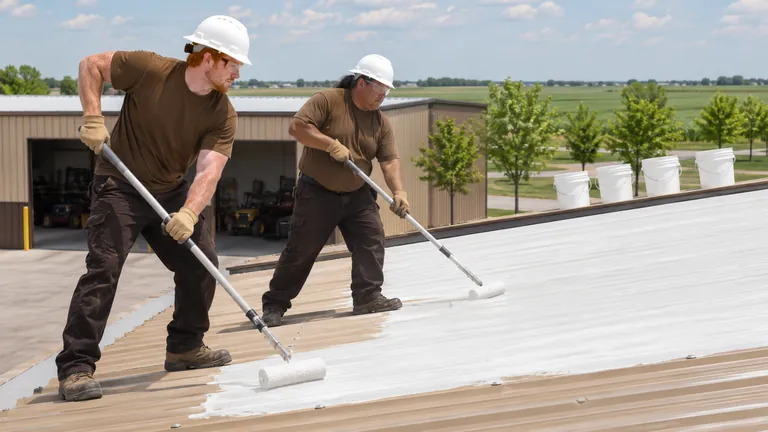
Pitched metal panels that drain fast. Acrylic goes on as a base coat and a finish coat during warm, dry stretches and accepts acrylic recoats years later.
See Acrylic Roof Coating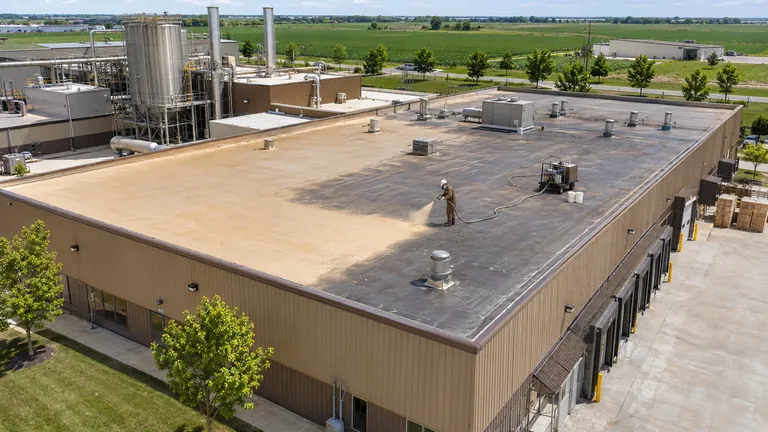
Uninsulated steel buildings and flat roofs that need added insulation. Closed-cell foam is sprayed over the panels, then a protective coating keeps sunlight off it.
See Spray Foam Roofing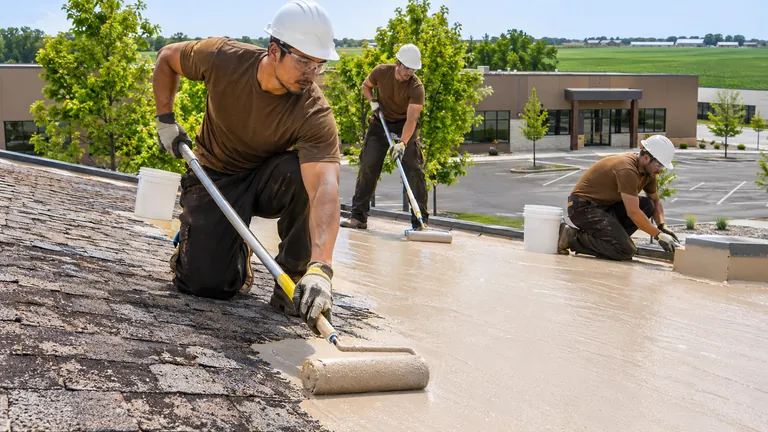
Asphalt shingles on offices, churches, and storefronts that still lie flat and hold granules. Repairs and a wash come first, then measured coats made for shingles.
See Shingle Roof CoatingMatch what your roof shows to the system we usually start with. The inspection confirms it before any price is final.
Panels are firm, rust sits on the surface, and laps are tight enough to seal.
Water still sits two days after rain near drains or sagging purlins.
Rain clears quickly and the panels see full sun most of the day.
Inside temperatures swing with the weather and condensation drips in winter.
Tabs are broken, decking feels soft, or the flashing has failed.
Give us the roof size, roof type, and what you see on it. A ballpark range is the first step, and the roof walk settles the system.
The five steps stay the same whichever system goes on. What changes from roof to roof is the primer, the fabric, and the film thickness.
Every coating job opens with a walk of the whole roof. We probe soft spots, test screws, look under the deck where we can, and mark which areas need repair before coating.
Slope, ponding marks, panel profile, and insulation needs point to silicone, acrylic, foam, or a metal coating system. We explain why one fits your roof better than the others.
Rusted-through panels, stripped screws, split curb flashing, and broken shingles are replaced or rebuilt, so the coating goes over a roof that holds together.
Cleaning removes chalk, oil, and dirt. Rust gets ground and primed, foam gets a dry substrate, and shingles get washed and checked for loose granules.
Detail coats and fabric go on laps, curbs, and penetrations first. Field coats follow at spec thickness, and we gauge the film before calling a section done.
Owners comparing coating systems tend to ask these questions first. Each answer comes from what we see on steel, flat, and shingled roofs around Papillion.
Each one falls within the coating planning range of about $2.50 to $4.00 per square foot, and the work on your roof sets the number. Foam depth, silicone film thickness, and the amount of prep move each job. Acrylic often lands lower in the range on clean, sloped panels.
Prep work raises it most. Heavy rust grinding, panel replacement, screw swaps, and fabric on every lap add labor before the first field coat. Hard roof access and work around rooftop units add time too. Wet insulation is the biggest swing, since it can turn a coating job into a replacement.
The roof decides. We look at slope, drainage, panel type, rust, and whether the building needs insulation. Low spots that pond point to silicone, fast-draining pitched steel to acrylic, bare uninsulated shops to foam, and firm steel with surface rust to a metal coating system.
Yes. A plant with a flat section and a pitched steel section can take silicone on the flat area and acrylic on the slopes. We detail the transition so the two coatings meet cleanly and keep a record of which system covers which area for future recoats.
Repairs such as screw replacement and panel swaps can go ahead on dry winter days. Coatings need the temperatures and dry hours their makers list, so acrylic waits for late spring through early fall, and silicone and foam go on during dry stretches when the panels stay above the minimum.
Sometimes. Acrylic takes acrylic recoats easily, and silicone takes only silicone. Foam is always recoated with a compatible topcoat. When an owner wants to change systems, we test adhesion on a small area first and explain what the switch requires before any work is priced.
The building type matters less than the roof on it. A warehouse with pitched exposed-fastener steel and a church with a low-slope addition can each need two systems. We choose by slope, drainage, rust, and insulation needs, then match the prep to the roof details we find on the walk.
Service life follows film thickness, drainage, foot traffic, and upkeep more than the label on the bucket. Thicker films last longer, roofs that drain well wear evenly, and yearly inspections catch hail cuts and worn spots before water reaches the steel or foam.
Share the roof size and condition for a ballpark range, then we walk the roof and confirm the system.