If Your Roof
Drains Fast on a Steady Pitch
Rain runs off the panels quickly and no dirt rings mark low spots.
Start WithAcrylic Base and Finish Coats
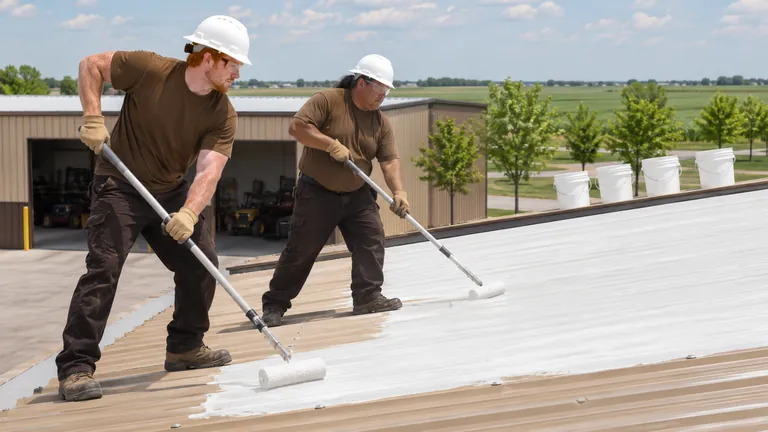
As a Papillion acrylic roof coating contractor, we apply base and finish coats to pitched metal roofs that drain fast, scheduled for warm, dry stretches of weather.
Papillion acrylic roof coating works best on steel that sheds water within minutes. These cards show what points toward it.
Rain runs off the panels quickly and no dirt rings mark low spots.
The original film still sticks but the primer shows through on south slopes.
Faded paint and warm panels show how much heat reaches the steel.
Ponds sit for days near drains or between sagging purlins.
Acrylic answers a short list of problems on pitched steel. Here is what owners see and what the work involves.
Years of ultraviolet light have broken down the factory paint until it powders off.
We wash the chalk off, prime any rust, and roll on a white acrylic base coat and finish coat.
Ridge cap closures and sealant have shrunk, so wind drives rain under the cap.
Each ridge cap is cleaned, bedded with fabric in base coat, and topcoated before the field coats run up to it.
Water sits around each washer, and the paint breaks down there first.
Screws are tightened or swapped, rust is brushed off and primed, and each head gets its own acrylic cap.
An earlier acrylic was applied too late in the year and never fully cured.
Loose film is removed, the edges are feathered, and new acrylic goes on during a warm, dry stretch.
Acrylic jobs differ in the coats, colors, and prep they use. This spec sheet lists the options we pick from on pitched steel.
| Option | Best On | Prep It Needs | Recoat Later With |
|---|---|---|---|
| White base and white finish | Sunny pitched panels | Wash, lap fabric | Acrylic |
| Contrasting base and finish | Roofs where coverage must be checked by eye | Wash, primer, fabric | Acrylic |
| Acrylic over rust primer | Panels with surface rust | Grind, rust primer | Acrylic |
| Acrylic recoat | Worn acrylic that still adheres | Wash, adhesion test | Acrylic |
| Acrylic with silicone low zones | Pitched roofs with one flat area | Transition detail | Each system on its zone |
On pitched steel, acrylic changes the surface, the details, and the upkeep. Here is the difference from deck level.
Acrylic needs warm days and nights to cure. Send the roof size now, and we can plan the work for the next warm, dry stretch.
Acrylic is water-based, so weather sets the schedule. The steps stay the same, and each one waits for the right conditions.
We confirm the roof drains fast enough for acrylic, check every lap and ridge cap, and test any older coating for adhesion before planning.
Daytime and overnight temperatures have to stay above the maker’s minimum, with several dry hours after each coat. Late spring to early fall fits best here.
Chalk, dirt, and oil come off with a power wash. Flaking rust is brushed to firm metal and primed so the base coat has something solid to grip.
Fabric bedded in base coat goes over ridge caps, laps, curbs, and screw heads, giving each weak spot a reinforced layer.
A base coat and a finish coat, often in contrasting colors, go on as two even passes. We measure film thickness so both coats reach spec.
When acrylic does not fit part of the roof, one of these takes over on that section.
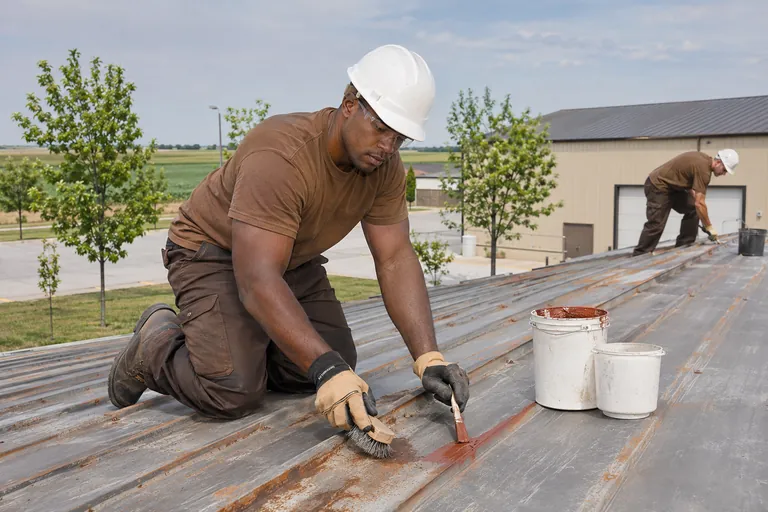
Steel with heavy rust or hundreds of loose screws starts with a full metal roof coating prep before any topcoat is chosen.
See Metal Roof Coating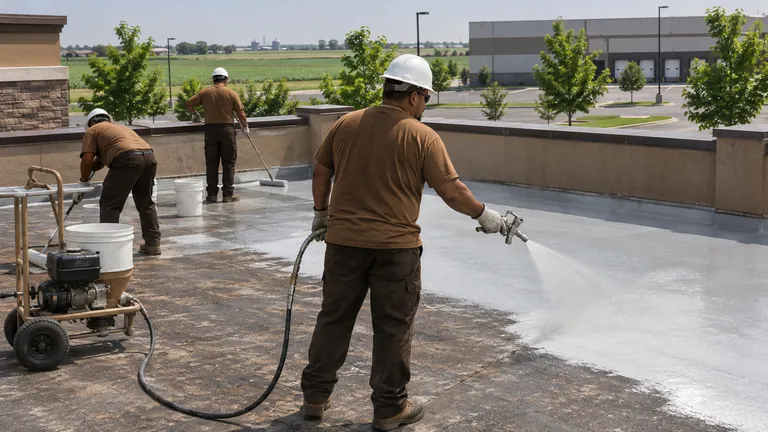
Flat or sagging zones that hold water after rain get silicone, because acrylic softens and lets go under ponding.
See Silicone Roof Coating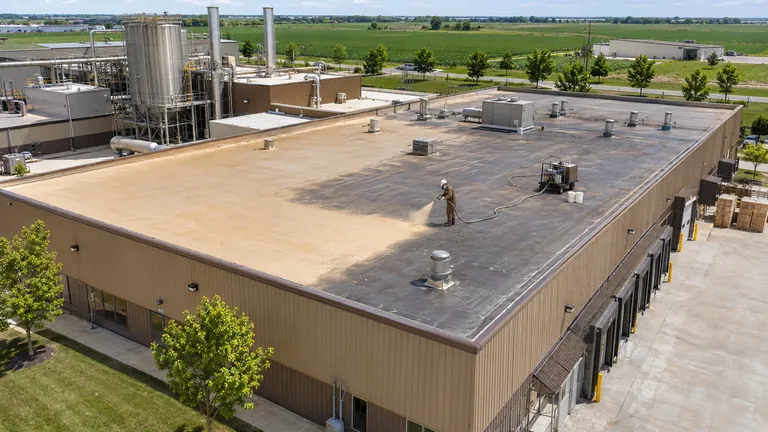
Pitched steel over an uninsulated shop can take foam for insulation, then a compatible topcoat to protect the foam.
See Spray Foam Roofing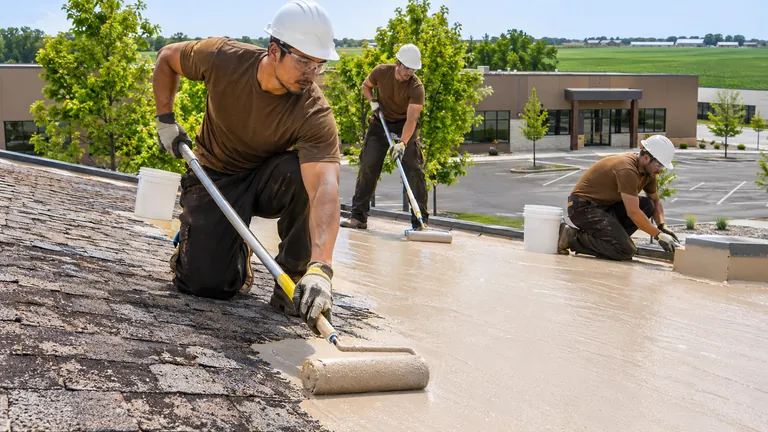
Shingled office sections on the same property get a coating made for asphalt, applied after loose shingles are fixed.
See Shingle Roof CoatingWhat owners want to know before an acrylic coat goes on their steel roof.
Acrylic falls inside the coating planning range of about $2.50 to $4.00 per square foot and often lands lower on clean, pitched panels. Rust treatment, primer, ridge and lap fabric, and extra coats raise it. Roof height and work around rooftop equipment change labor time.
In most cases two: a base coat and a finish coat, often in contrasting colors so coverage is easy to check. Two thinner passes cure more evenly than one heavy one. Fabric and base coat go on the laps and screws before the base coat.
During the warm months, when day and night temperatures stay above the maker’s minimum and dry hours follow each coat. Cool fall nights slow curing, so we schedule acrylic for warm, dry stretches, usually late spring through early fall.
Two stand out: poor ponding resistance and weather-sensitive curing. Acrylic softens where water stands for days, and rain, dew, or a freeze before it cures can damage the film. We keep acrylic on pitched steel that drains fast and use silicone on flat, ponding areas.
Film thickness, drainage, and upkeep decide it. Thicker coats last longer, and pitched roofs that shed water wear evenly. Sunlight slowly erodes the top layer, and foot traffic wears it faster. Acrylic can be washed and recoated with acrylic before it wears through.
Tell us the roof size and pitch. We give you a ballpark range and schedule the work for warm, dry weather.