If Your Roof
Covers an Uninsulated Steel Shop
Heat pours through bare panels in July and condensation drips in January.
Start WithFoam Plus Topcoat
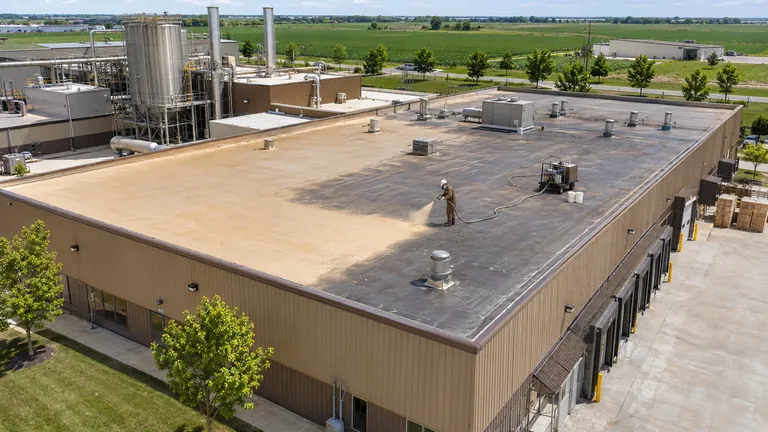
As a Papillion spray foam roofing contractor, we spray closed-cell foam over dry metal and flat roofs, then cover it with a topcoat that keeps sunlight off.
Papillion spray foam roofing needs a dry, firm surface and calm weather. These conditions show whether a roof is ready for it.
Heat pours through bare panels in July and condensation drips in January.
Leaks track along corrugations and fastener lines all over the roof.
Foam can be sprayed thicker in low areas to help water move toward drains.
Wet core samples or soft deck show water trapped under the roof.
Foam takes on two problems at once: water getting in and heat moving through. Here is how it plays out on real roofs.
Warm air inside meets bare steel that has no insulation above it.
Closed-cell foam is sprayed over the panels at a set depth, moving the cold surface outside the steel.
Water travels along panel ribs from laps and screw holes far from where it drips.
Foam fills the corrugations and buries every lap and screw under one joint-free layer.
The protective topcoat wore off and sunlight reached the foam.
Damaged foam is cut back and patched, then a fresh topcoat goes on at full thickness.
Hailstones punch through worn topcoat and bruise the foam beneath.
Each damaged spot is cleaned, filled with foam or sealant, and recoated before water reaches it.
A foam roof is the foam plus its topcoat. This spec sheet shows the choices we make for each job here.
| Option | Best On | Prep It Needs | Recoat Later With |
|---|---|---|---|
| Foam with silicone topcoat | Flat roofs that pond | Dry substrate, primer | Silicone |
| Foam with acrylic topcoat | Pitched steel that drains fast | Dry substrate, rust primer | Acrylic |
| Tapered foam | Flat roofs with low areas near drains | Drain check, layout | The topcoat system |
| Foam over metal panels | Uninsulated steel shops | Screw check, wash, primer | The topcoat system |
| Foam repair and recoat | Older foam roofs with worn topcoat | Cut out damage, patch | Matching topcoat |
A foam roof changes both the roof surface and the building under it. These are the changes owners notice first.
Call and tell us the size of the building and when the dripping happens. Foam over the panels is one way to stop it, and we check the roof first.
(531) 985-9881
Foam bonds only to a clean, dry surface and needs still air to spray. Each step here keeps those conditions in place.
We take moisture readings, pull core samples where readings run high, check screws and laps, and note air intakes and open doors near the roof.
Any soaked insulation found during the inspection is removed and replaced, because foam sprayed over moisture holds it against the deck.
Panels are washed and dried, rust is brushed off and primed, and loose screws are tightened so the foam sits on a firm surface.
With intakes shut and nearby vehicles covered, foam goes on in lifts to the specified depth during calm, dry weather.
A silicone or acrylic topcoat goes on at full thickness the same week, covering every inch of foam before sunlight can reach it.
Foam is often one part of a larger plan for a building. These systems tend to share the job.
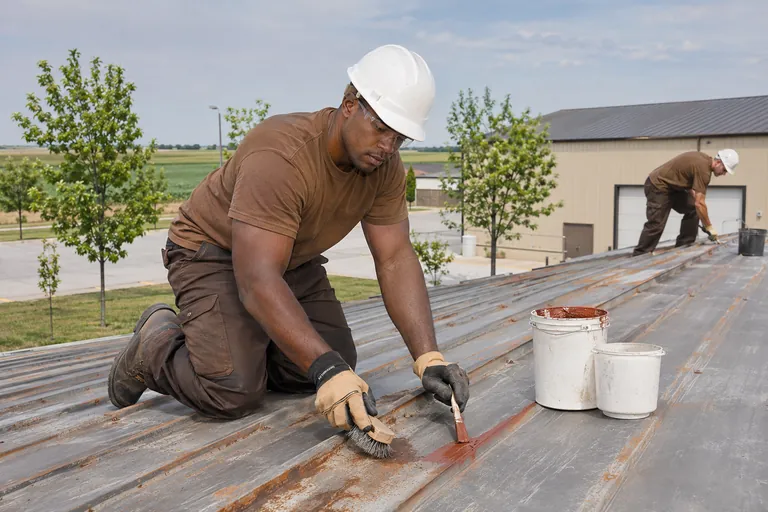
Steel roofs that are already insulated below often need only a metal roof coating system, with no foam layer at all.
See Metal Roof Coating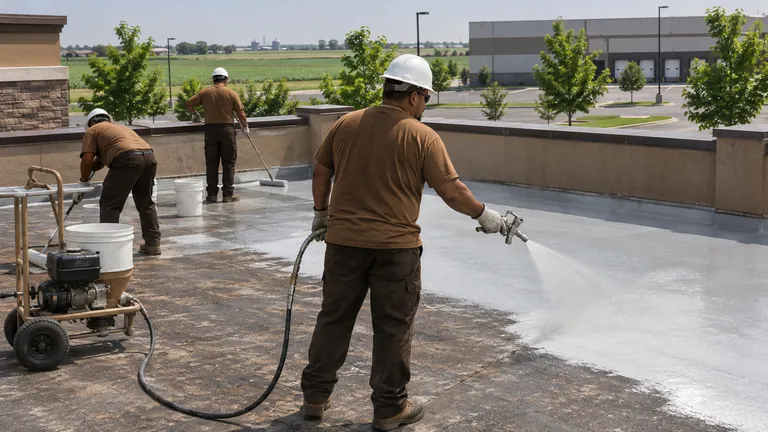
Silicone is the topcoat we use most over flat foam roofs, and the same silicone goes on any later recoat.
See Silicone Roof Coating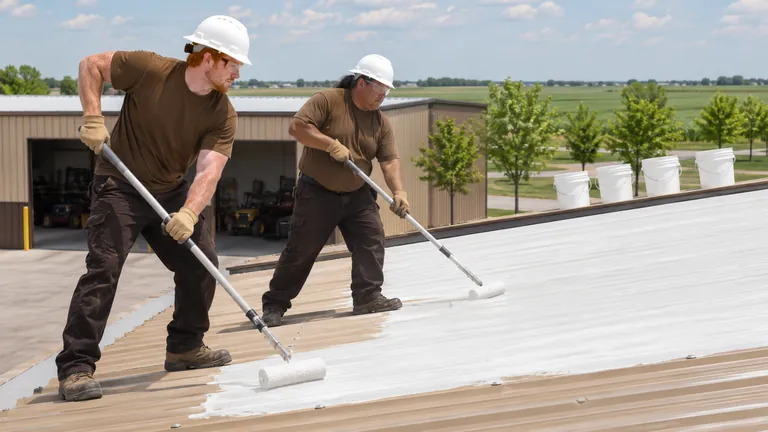
Pitched foam roofs that shed water quickly can take an acrylic topcoat, which recoats easily with more acrylic.
See Acrylic Roof Coating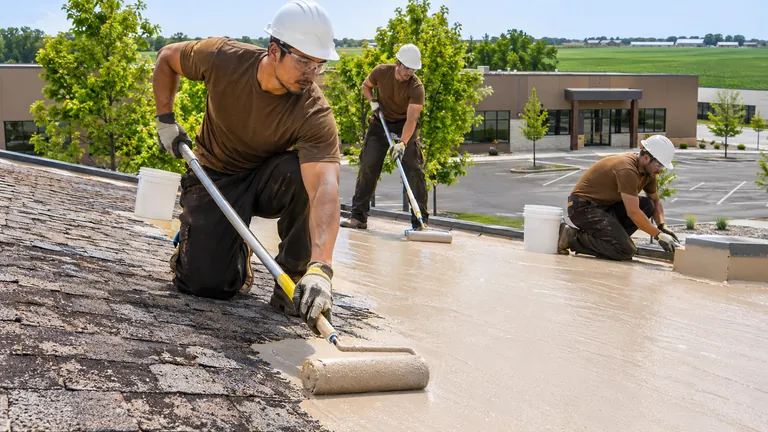
Shingled entries or office wings attached to a foam roof get their own coating made for asphalt shingles.
See Shingle Roof CoatingOwners weighing foam for a steel shop or flat roof ask these most.
Foam depth and the topcoat set most of the price, since thicker foam adds insulation and material. For planning, coating work runs about $2.50 to $4.00 per square foot and replacement about $5 to $8. We price foam after measuring, checking for wet insulation, and setting the depth.
Yes, once the roof under it is dry and firm. Foam covers laps, ribs, and screws with one continuous layer and fills the gaps where water gets in. Rusted-through panels and wet insulation are fixed first, then a topcoat protects the foam.
It places a rigid closed-cell layer right on top of the panels. Each inch adds thermal resistance, so the depth we spray sets the insulating value. Foam also stops air leaks at laps and ridges, which helps most in uninsulated shops and warehouses.
On the plus side, foam adds insulation and a joint-free surface over metal or flat roofs. On the other side, spraying needs calm, dry weather, exposed foam breaks down in sunlight, and hail or foot traffic can damage it. Its topcoat has to be kept up and recoated on a regular cycle.
As long as the foam stays covered. Sunlight breaks down bare foam, so the topcoat is the layer that wears. Recoating on a regular cycle renews it, and fixing hail punctures and worn spots near equipment quickly keeps water out of the foam.
Send the roof size and tell us whether the building is insulated. We give you a ballpark range and plan the moisture check.