If Your Roof
Holds Shallow Ponds Two Days After Rain
Rings of dirt mark where water sits near drains or between purlins.
Start WithSilicone Field Coat
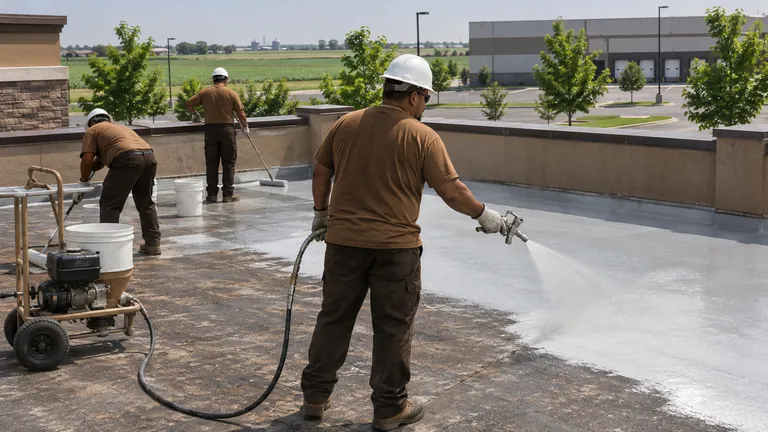
As a Papillion silicone roof coating contractor, we coat low-slope and flat commercial roofs where water lingers after storms, after checking why it sits there.
Papillion silicone roof coating fits roofs that drain slowly but still have firm decks. These are the conditions that point toward it, or away.
Rings of dirt mark where water sits near drains or between purlins.
The worn film still sticks, and patches of bare steel show through on the low side.
Water ponds on the flat part while the pitched panels drain fast.
Purlins or deck have bent under the weight of standing water and snow.
Silicone goes where other coatings break down under water. These are the roof problems that bring owners to it.
Drain bodies sit slightly high, or debris slows the outflow after every storm.
We clear the drains, check the flow, and coat the ponded zone with silicone, which resists breakdown under standing water.
Earlier acrylic softened under ponded water and lost its grip on the steel.
Loose coating is scraped off, edges are feathered, a primer goes down, and silicone covers the area at full thickness.
Scuppers and gutters run slow, so water backs up across the low edge of the roof.
Outlets are cleared and resealed with fabric and base coat, then silicone runs across the edge and into the scupper.
Curbs sit low on flat sections, and water stands against their flashing.
Each curb gets reinforced detail coats, and silicone is built up around the base where water collects.
Silicone comes in a few forms. This spec sheet shows what we choose between on low-slope roofs in town.
| Option | Best On | Prep It Needs | Recoat Later With |
|---|---|---|---|
| Single heavy silicone pass | Clean steel with light rust | Wash, primer where rusted | Silicone |
| Two-pass silicone | Roofs with deep ponding zones | Wash, drain repair, primer | Silicone |
| Silicone over old acrylic | Worn acrylic that still adheres | Adhesion test, primer | Silicone |
| Silicone with walkway pads | Roofs with frequent HVAC service | Pads set at service routes | Silicone |
| Silicone on flat zones only | Mixed flat and pitched roofs | Transition detail at slope change | Silicone on those zones |
Silicone changes how a low-slope roof handles water and sun. These are the differences you can see from the roof hatch.
Tell us the roof size and where the water collects. A ballpark range is the first step, then we find out why the water stays.
Silicone sticks well only to a clean, dry, primed surface. These five steps get the roof there and keep the film at spec.
We mark every ponding ring, check drain heights, probe low areas for soft deck, and test old coatings for adhesion before planning silicone.
Clogged drains and scuppers are cleared, and low edges are reflashed. Sagging purlins or crushed insulation get repaired so ponds stay shallow.
Pressure washing removes dirt and loose coating. Rusted spots are ground and primed, and older acrylic gets the primer the silicone maker calls for.
Base coat and fabric go over laps, curbs, drains, and pipe boots, so the details already carry a reinforced layer when the field coat arrives.
Silicone goes on in one or two passes to the specified dry film thickness. We read wet film with a gauge as each section is sprayed.
Few roofs are all one slope. These systems often share a building with a silicone section.
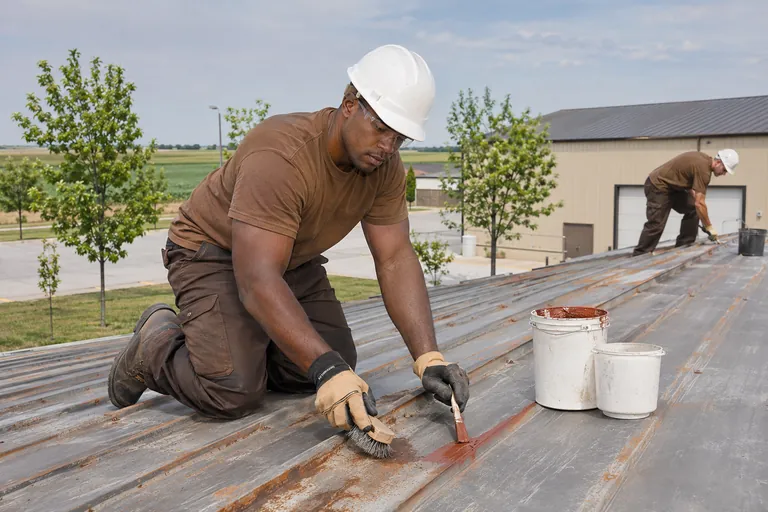
Pitched steel around a silicone low area gets a metal roof coating system, with the transition detailed where the slope changes.
See Metal Roof Coating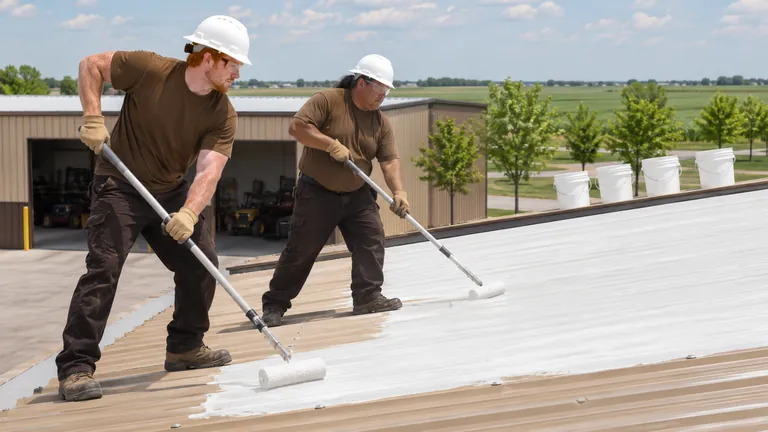
Fast-draining slopes on the same building can carry acrylic, which costs less per gallon and suits panels that never hold water.
See Acrylic Roof Coating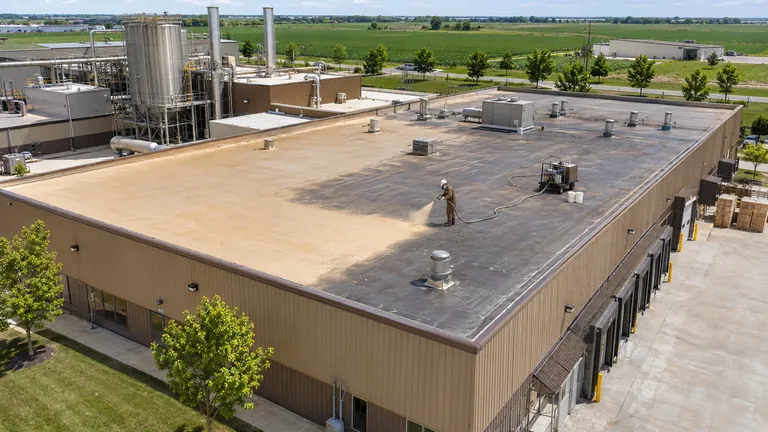
Flat roofs that need insulation as well as ponding resistance can take foam first, with silicone as the protective topcoat over it.
See Spray Foam Roofing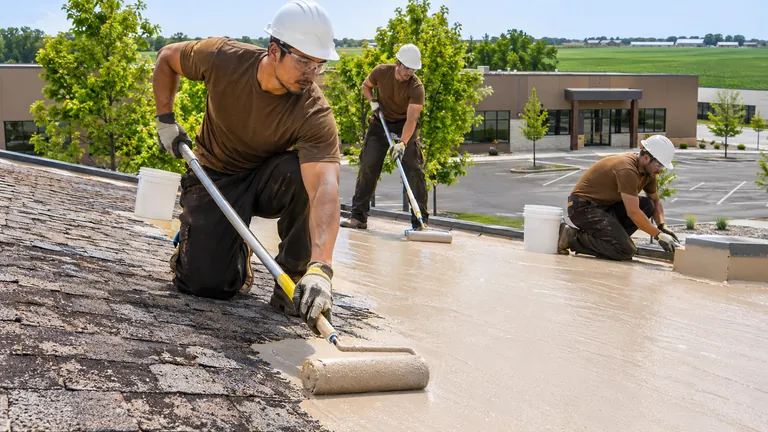
Shingled entry roofs and office wings next to a flat silicone roof get a coating made for asphalt shingles instead.
See Shingle Roof CoatingWhat owners ask before choosing silicone for a flat or low-slope roof.
Silicone work sits inside the coating planning range of about $2.50 to $4.00 per square foot. Thicker specs need more gallons, so dry film thickness drives much of the price. Primer, seam fabric, screw work, drain repair, and roof access add to the total.
One or two, set by the dry film thickness the system calls for. Some silicones go on in a single heavy pass and others split the thickness across two passes. Laps, curbs, and drains get extra base coat and fabric first, and we gauge the wet film as we spray.
Silicone goes over ponded areas after they dry, and it holds up once water returns. We look at why water sits first: clogged drains, sagging purlins, or crushed insulation get fixed, because ponds still add weight and collect dirt even on a silicone roof.
Roofs with low spots and slow drainage suit silicone, and pitched panels that shed water fast suit acrylic. Acrylic costs less per gallon and takes acrylic recoats easily. Silicone picks up more dirt and must be recoated with silicone. Slope and ponding marks settle it.
Dirt pickup, recoat limits, and slick footing. Dust sticks to the surface and dulls it over time, only silicone bonds well to old silicone, and wet silicone is slippery for HVAC techs. Heavy foot traffic can tear it, so we add walkway pads along service routes.
Tell us where water sits on your roof and how big the roof is. We give you a ballpark range and plan the inspection.